Tina Russell · 19 October 2026
Examining Controlled Lunar Light Exposure and Anthocyanin Production in Indoor Rare Floral Hybrids
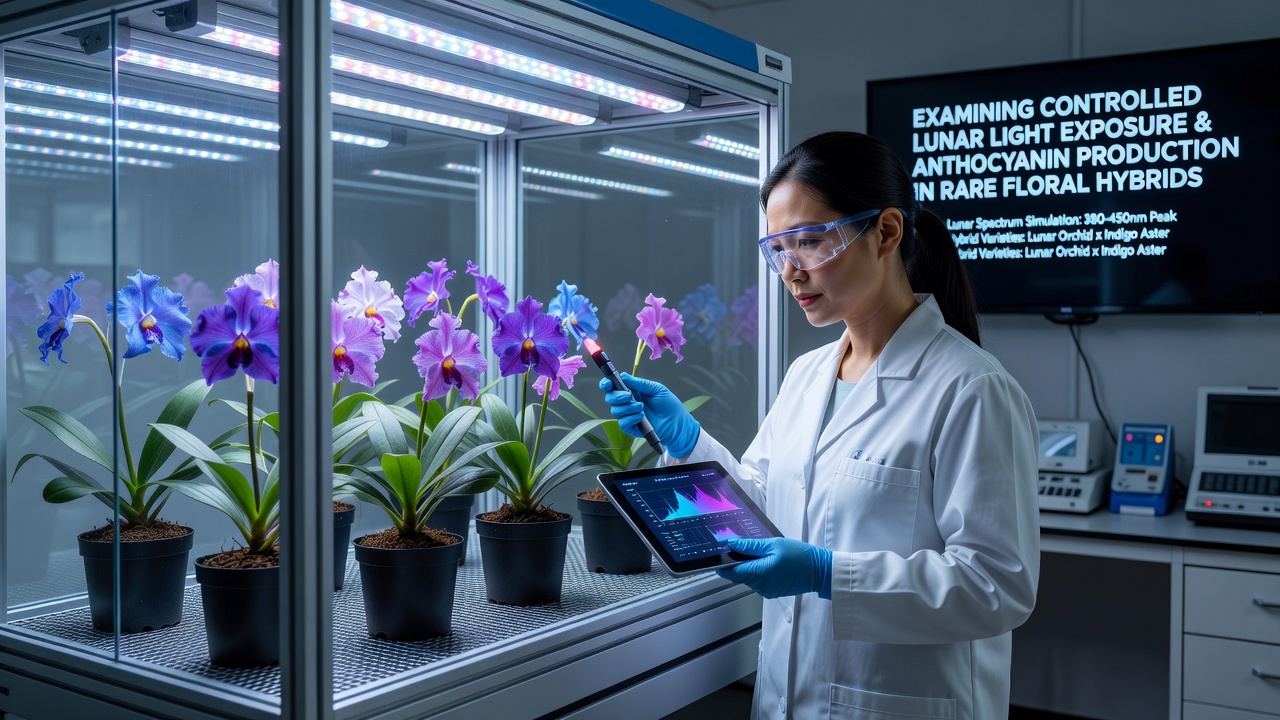
Researchers have examined how precise simulations of lunar light cycles influence anthocyanin levels in rare floral hybrids cultivated under fully indoor conditions, and studies track pigment accumulation across multiple growth phases using calibrated LED systems that replicate moonlight intensity and spectral qualities. Data from controlled environments show that anthocyanin production responds to low-level illumination patterns rather than high-intensity daylight alone, with measurements taken at regular intervals during simulated lunar cycles. Observers note that hybrids derived from species such as certain orchids and gesneriads display measurable shifts in pigment concentration when exposed to these regimens, and figures from replicated trials indicate changes that correlate with specific phase durations.
Methods for Simulating Lunar Illumination Indoors
Facilities employ full-spectrum LEDs tuned to deliver approximately 0.1 to 0.3 lux at plant canopy level, matching documented moonlight readings collected at various latitudes, while photoperiod controllers adjust duration and spectral filters to approximate waxing and waning periods. Technicians record temperature, humidity, and nutrient delivery separately to isolate light effects, and protocols require consistent baseline daylight equivalents during active growth windows before introducing lunar treatments. Data loggers capture hourly readings, and researchers cross-reference these against anthocyanin assays performed via spectrophotometry on leaf and petal samples harvested at set intervals. One study revealed that timing the onset of simulated moonlight to coincide with natural circadian peaks produced stronger responses in certain hybrid lines, whereas offset timing yielded different accumulation rates.
Observed Effects on Pigment Accumulation
Measurements indicate that anthocyanin concentrations rose by measurable percentages in plants receiving nightly lunar exposure compared with control groups kept under continuous darkness after daylight periods, and the increase appeared most pronounced in petal tissues of hybrids with genetic backgrounds linked to high-flavonoid parent species. Researchers tracked these shifts over multi-week cycles, and results demonstrated that shorter exposure windows aligned with new moon phases produced subtler changes while longer full-moon simulations amplified pigment output up to a plateau point. What's interesting is that spectral composition mattered as well, since treatments incorporating higher proportions of red and far-red wavelengths elicited stronger anthocyanin responses than cooler blue-dominant mixes in several tested cultivars.
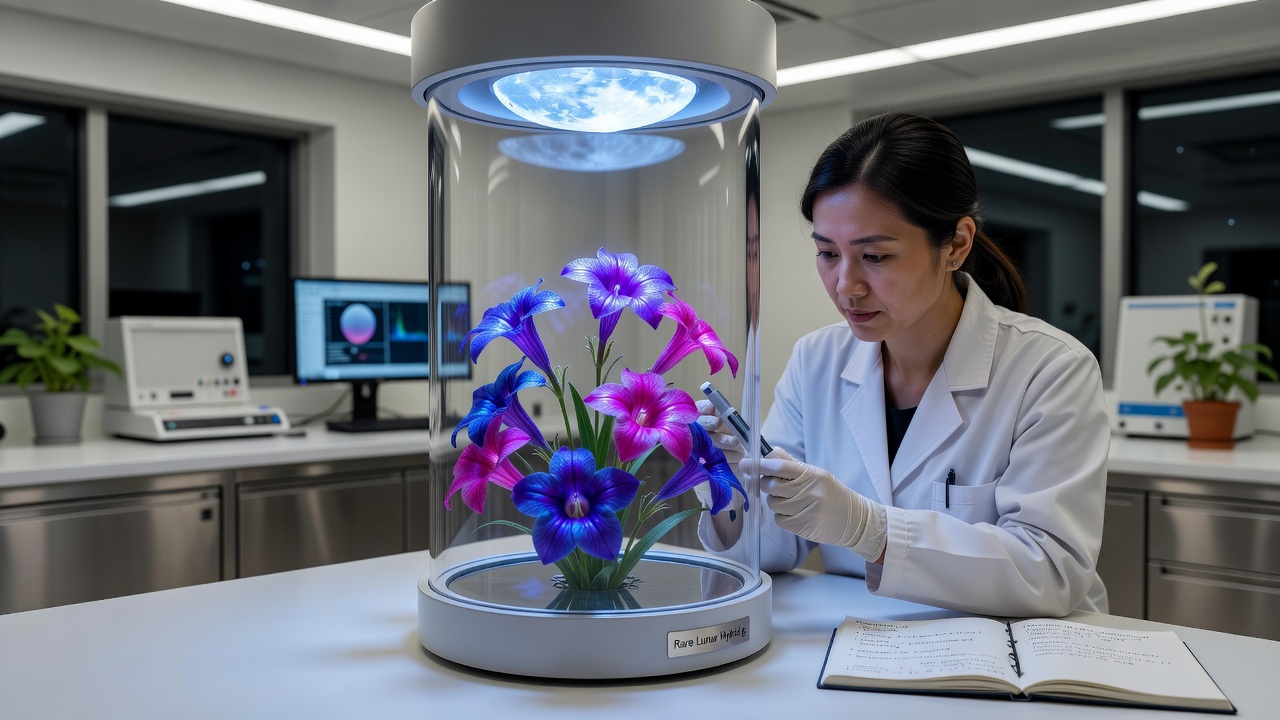
Additional trials conducted through 2025 and into October 2026 confirmed repeatability across different hybrid combinations, and presentations at the International Society for Horticultural Science symposium that month detailed consistent patterns in pigment profiles without altering overall biomass accumulation. Data sets compiled from multiple laboratories show that anthocyanin elevation occurs primarily during the dark period following lunar light exposure rather than during the illumination itself, suggesting a delayed metabolic trigger. Those who've studied these responses observe that the effect scales with hybrid genetics, as lines carrying alleles from high-altitude progenitors reacted more readily than lowland-derived varieties.
Integration with Existing Indoor Cultivation Protocols
Commercial and research growers incorporate lunar simulation modules into existing vertical farming arrays by adding low-power LED strips controlled through central software that synchronizes with local time zones and seasonal adjustments. According to USDA Agricultural Research Service publications on controlled environment lighting, such supplemental regimens require minimal energy input while allowing fine-tuning of secondary metabolite pathways. Growers monitor electrical conductivity and pH in hydroponic solutions to ensure nutrient uptake supports the observed pigment increases, and automated systems flag deviations that might mask light-driven effects. Reports from European facilities indicate similar integration approaches, with emphasis on maintaining stable carbon dioxide levels during the extended dark periods that follow lunar exposure windows.
Broader Applications and Ongoing Research
Findings contribute to efforts aimed at optimizing ornamental crop quality under artificial conditions, where anthocyanin content influences both visual appeal and potential stress resilience. Research teams continue to test combinations of lunar light with variations in nutrient formulas and temperature differentials, and preliminary results suggest synergistic effects when certain mineral ratios coincide with specific lunar phase timings. Wageningen University plant research reports document parallel work on light quality modulation in greenhouse settings that informs these indoor hybrid studies. Observers note that scaling these techniques to larger production areas involves recalibrating light distribution to account for canopy density and reflector geometry, yet the core pigment response remains consistent across scales tested so far.
Conclusion
Controlled lunar light exposure alters anthocyanin production in rare floral hybrids grown indoors through measurable, repeatable mechanisms tied to intensity, spectrum, and timing. Ongoing data collection through 2026 and beyond continues to refine parameters for different hybrid groups, providing growers with additional tools for managing pigment profiles without increasing overall energy demands. The accumulated evidence supports further integration of these low-intensity regimens into standard indoor cultivation frameworks across varied geographic research centers.