Willa Klein · 7 September 2026
Decoding Nocturnal Pollination Patterns That Drive Shifts in Wildflower Cultivation Timelines
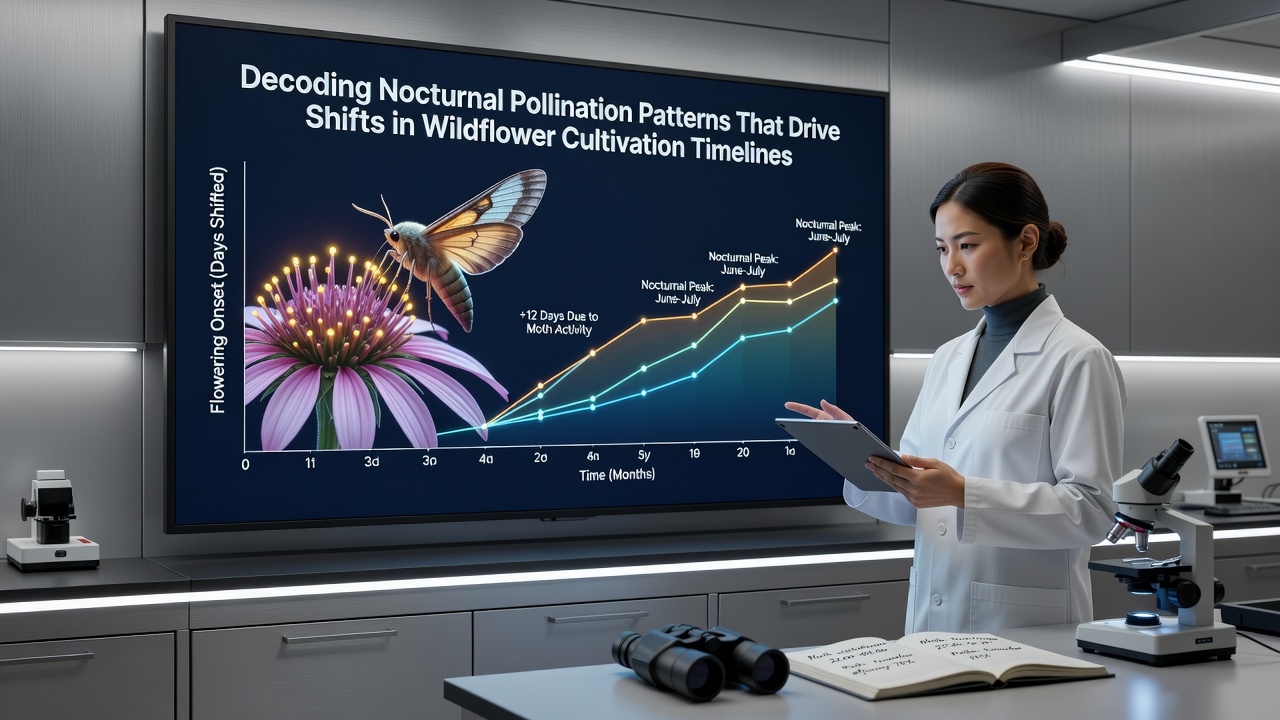
Researchers have documented how nocturnal pollinators such as moths and certain bat species interact with wildflower species during nighttime hours and how those interactions alter optimal planting and harvesting windows for cultivation programs. Data from long-term monitoring stations show that peak activity periods for these pollinators often occur between 9 p.m. and 2 a.m. in temperate zones while temperature and humidity levels create narrow windows of opportunity for pollen transfer. Those patterns have prompted cultivation managers to adjust sowing dates by as much as three weeks in some regions to align bloom periods with pollinator presence rather than daylight schedules alone.
Understanding Nocturnal Pollinator Activity Cycles
Studies tracking hawkmoth populations across multiple continents reveal that these insects follow lunar cycles and temperature thresholds that differ from diurnal pollinators. Observations recorded in field sites indicate that certain wildflower species release stronger volatile compounds after sunset which in turn attract specific moth species responsible for the majority of nighttime pollen movement. Researchers note that when ambient temperatures remain above 15 degrees Celsius after dark the visitation rates increase measurably while cooler nights reduce activity and delay seed set. This information has led cultivation teams to incorporate nighttime temperature forecasts into their planning models so that fields reach peak bloom precisely when pollinator numbers are highest.
Regional Variations in Nighttime Pollination
Geographic differences appear in the timing and intensity of nocturnal pollination events. In Mediterranean climates for example the European Environment Agency has compiled records showing that certain orchid species depend almost entirely on night-flying insects during late summer months whereas northern European populations of the same species receive supplementary visits from daytime bees. Similar contrasts emerge in North American prairie systems where USDA monitoring programs have logged shifts in bloom duration tied to changing moth migration routes. Cultivation timelines in these areas now incorporate regional pollinator calendars that account for both species composition and seasonal weather anomalies observed over the past decade.
Data Sources Informing Timeline Adjustments
Longitudinal datasets collected by government agencies and academic institutions supply the quantitative basis for revised cultivation schedules. Figures released by the Australian Department of Climate Change, Energy, the Environment and Water in September 2026 documented a two-week advance in peak nocturnal pollinator activity across several wildflower habitats compared with records from 2015. Those findings prompted cultivation operators in southern Australia to move planting dates forward while monitoring soil moisture and nighttime humidity to maintain successful germination rates. Parallel work at Canadian research stations has identified comparable adjustments for species such as evening primrose where moth pollination accounts for the bulk of seed production.
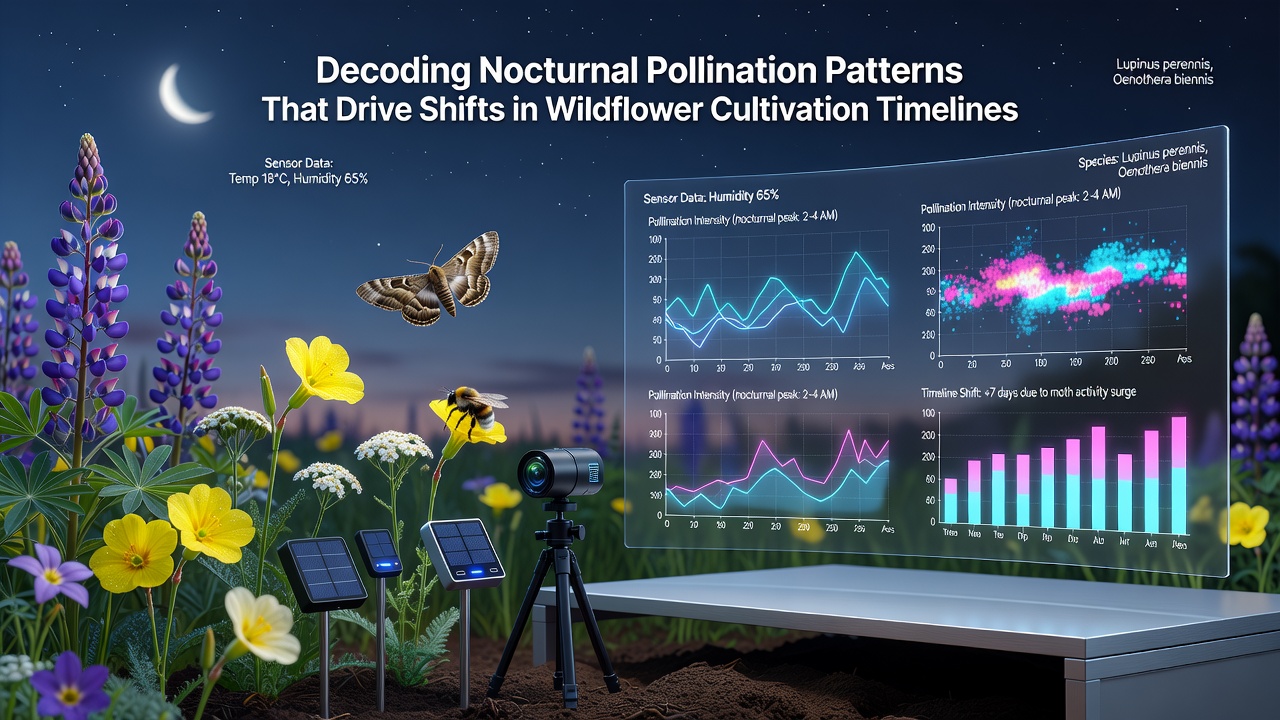
Integration of satellite-derived climate variables with ground-level pollinator counts allows models to forecast bloom windows with greater precision. Analysts combine these inputs to predict when specific wildflower stands will reach anthesis under varying nighttime conditions and they adjust irrigation and soil preparation steps accordingly. The resulting cultivation calendars differ substantially from traditional daylight-based schedules and they require ongoing updates as new monitoring data arrive each season.
Practical Implications for Cultivation Operations
Commercial and conservation nurseries have begun embedding nocturnal pollination forecasts into operational software that guides daily tasks. Crews now schedule supplemental lighting or protective netting during critical night hours when data indicate elevated pollinator activity or when temperature drops threaten to suppress moth flight. In several documented cases farms that adopted these practices reported higher seed yields and more consistent germination percentages across successive plantings. Training programs for field staff emphasize recognition of nighttime environmental cues such as dew formation patterns and wind shifts that correlate with pollinator presence.
Monitoring Technologies and Their Role
Automated camera traps equipped with infrared sensors now capture visitation rates throughout the night and transmit summaries to central databases used by cultivation planners. Acoustic sensors tuned to moth wingbeat frequencies provide additional layers of information that help distinguish between pollinator species active in the same habitat. These technologies reduce reliance on manual nighttime surveys while increasing the volume of data available for refining timeline models. Operators who combine sensor outputs with regional weather services achieve more reliable alignment between bloom periods and peak nocturnal activity windows.
Conclusion
Decoding nocturnal pollination patterns continues to reshape how wildflower cultivation timelines are established and revised. Evidence from multiple monitoring networks demonstrates that alignment with nighttime pollinator cycles produces measurable improvements in reproductive success for many species. Ongoing collection of temperature, humidity, and visitation data supports iterative adjustments that keep cultivation practices synchronized with the biological realities of nocturnal pollen transfer. As additional datasets accumulate from diverse regions the precision of these timeline shifts is expected to increase further.